Call us now :07971189705
 Send Inquiry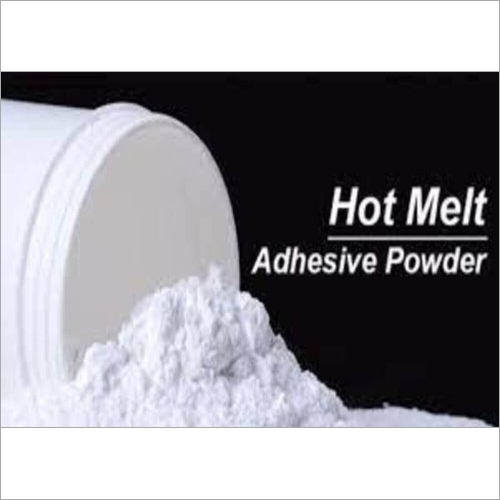
Hot Melt Adhesive Powder
900 INR/Kilograms
Product Details:
- Type Hot Melt Adhesive Powder
- Material Polyurethane (PU) / Polyester (PES) / Polyamide (PA)
- Capacity 10-25 kg/bag
- Computerized No
- Automatic Grade Manual
- Working Temperature 110C - 150C
- Size 40-150 microns (particle size range)
- Click to View more
X
Hot Melt Adhesive Powder Price And Quantity
- 900 INR/Kilograms
- 20 Kilograms
- Medium to High (upon melting)
- 12 Months
- High Adhesion
- Non-toxic
- Varies by composition: 100°C - 125°C
- 105°C - 140°C (depending on material)
- Textile Lamination, Heat Transfer Printing, Garment, Shoes, Automotive Interiors
- White or Off-white Powder
- Odorless
- Insoluble in Water
- Cool, Dry Place
Hot Melt Adhesive Powder Product Specifications
- 110C - 150C
- Polyurethane (PU) / Polyester (PES) / Polyamide (PA)
- Manual
- Hot Melt Adhesive Powder
- 10-25 kg/bag
- Standard bag
- No
- 40-150 microns (particle size range)
- 10 / 15 / 20 / 25 (bag options)
- Medium to High (upon melting)
- 12 Months
- High Adhesion
- Non-toxic
- Varies by composition: 100°C - 125°C
- 105°C - 140°C (depending on material)
- Textile Lamination, Heat Transfer Printing, Garment, Shoes, Automotive Interiors
- White or Off-white Powder
- Odorless
- Insoluble in Water
- Cool, Dry Place
Product Description
Hot melt adhesive powder we deal in is an advanced quality adhesive material, which can be kept at the room temperature. It can applied on the surface for advanced level of bonding. The adhesive powder has been formulated from a polymer base. It can be used for a wide range of industries, such as textiles, packaging, and construction and automotive. Hot melt adhesive powder has faster drying time and advanced level of bonding strength. It has lower VOC emissions and is simple to handle as well as apply. The said powder is apt for several manufacturing applications.
Specification
| Make | IBTC |
| Packaging Size | 20 Kg |
| Packaging Type | Sack Bag |
| Application Industry | Sticker Printing making g |
| Form | Granules |
| Grade Standard | Industrial |
| Material Compatibility | powder |
| Country of Origin | Made in India |
Superior Bonding Performance
This hot melt adhesive powder delivers exceptional adhesion for various materials, including fabrics, leather, and automotive components. Its well-balanced viscosity upon melting assures robust bonding in demanding applications. Whether used in textile lamination or shoe manufacturing, the powder guarantees durability and consistency for end products.
Versatile Application Range
With compatibility across polyurethane, polyester, and polyamide bases, the powder supports a wide spectrum of lamination and heat transfer processes. Its adaptability to working temperatures between 110C and 150C allows manufacturers flexibility during production and helps achieve optimal bonding across different substrates.
Safe and Easy Handling
Non-toxic and odorless, this adhesive powder is easy to use and store. Its insolubility in water and controlled particle sizes (40-150 microns) make the application process manageable and clean, ensuring safe conditions for operators. The adhesive maintains its integrity for 12 months under recommended storage conditions.
FAQ's of Hot Melt Adhesive Powder:
Q: How is hot melt adhesive powder applied in textile lamination and garment production?
A: Hot melt adhesive powder is typically scattered or evenly spread onto the fabric surface, followed by heat pressing at a working temperature between 110C and 150C. This melts the powder, activating its adhesive properties and securely bonding the textile layers.Q: What are the main benefits of using this hot melt adhesive powder?
A: The primary benefits include high adhesion strength, versatility across multiple materials such as textiles and automotive interiors, non-toxicity, odorless operation, and ease of manual application. The powder's medium to high viscosity after melting enhances bond reliability and product quality.Q: When should this adhesive powder be used during the manufacturing process?
A: It is best to use the adhesive powder after preparing the materials or substrates to be bonded. Before heat pressing, ensure the powder is evenly distributed, then proceed during the lamination or bonding stage within the specified temperature range for optimal results.Q: Where should the hot melt adhesive powder be stored for maximal shelf life?
A: Store the powder in a cool, dry environment, away from moisture and direct sunlight. Proper storage in sealed bags extends its shelf life up to 12 months and preserves its bonding effectiveness.Q: What process ensures the best adhesion when using hot melt adhesive powder?
A: For optimal adhesion, evenly apply the powder to the substrate, then use a press or laminator at the recommended temperature (110C-150C) and pressure. This ensures the powder melts fully and creates a strong, uniform bond.Q: Is the powder suitable for use in heat transfer printing and automotive interiors?
A: Yes, this adhesive powder is designed to perform well in heat transfer printing and automotive interiors, providing robust adhesion and resisting separation, even under conditions of varying temperature and stress.Q: What particle size range is available, and how does it impact usage?
A: The powder comes in particle sizes ranging from 40 to 150 microns. Finer particles are preferable for thin laminates, while larger sizes suit thicker substrates or applications requiring more adhesive volume, enhancing flexibility for various manufacturing needs.Tell us about your requirement

Price:
Quantity
Select Unit
- 50
- 100
- 200
- 250
- 500
- 1000+
Additional detail
Mobile number
Email


 Send Inquiry
Our Products


Khasra No.3319, Gali No.2, Alipur, Delhi, Landmark Alipur Thana-Delhi - 110007, India

Mr Kumar Sagar
(Proprietor)
Mobile :07971189705
 Send Inquiry
 Send SMS
Developed and Managed by Infocom Network Private Limited.
